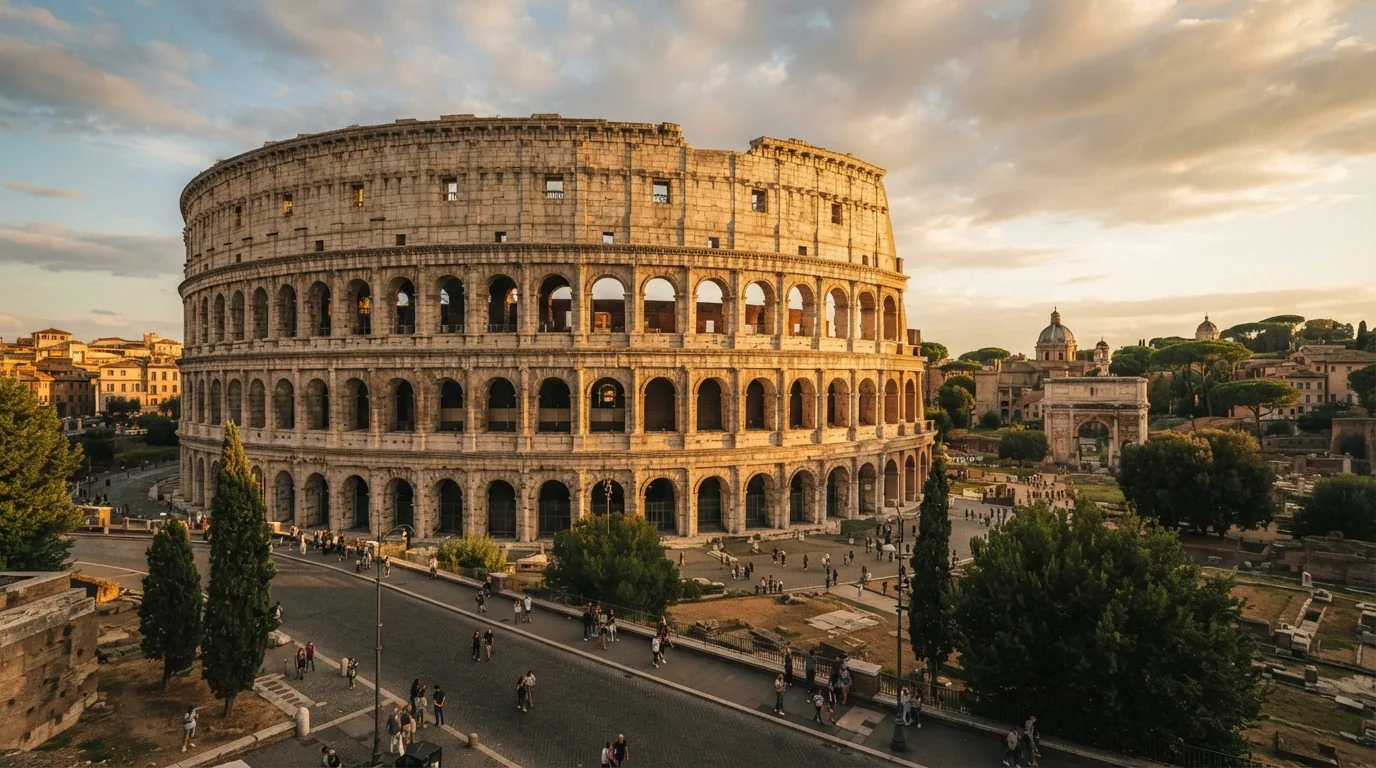
These plans are designed for the VoyaPlace assistant. A traveler can ask for a one-day route, a three-day classic route, a family plan, a budget plan or a romantic/luxury version, and the assistant can connect the request to this guide.
1-Day Essentials
Day 1: Rome essentials
Morning — Colosseum / Parco archeologico del Colosseo: Start with the strongest landmark or orientation stop and keep the route focused. 2–3 hours · 41.8902, 12.4922
Afternoon — Roman Forum and Palatine Hill: Move to the cultural or neighborhood layer for a slower local impression. 2–3 hours · 41.8925, 12.4853
Evening — Pantheon: Finish with a scenic, food or evening atmosphere stop without crossing too far. 1.5–2.5 hours · 41.8986, 12.4769
3-Day Classic
Day 1: First impression and main icons
Morning — Colosseum / Parco archeologico del Colosseo: Begin with the headline sight while energy is high. 2–3 hours · 41.8902, 12.4922
Afternoon — Roman Forum and Palatine Hill: Add heritage, street atmosphere or an easier neighborhood walk. 2–3 hours · 41.8925, 12.4853
Evening — Pantheon: Use the evening for views, food or a relaxed nearby stop. 2 hours · 41.8986, 12.4769
Day 2: Culture, food and slower districts
Morning — Trevi Fountain: Visit a second major attraction before crowds or heat increase. 2–3 hours · 41.9009, 12.4833
Afternoon — Vatican Museums: Shift into a different district, viewpoint or nature layer. 2–3 hours · 41.9065, 12.4536
Evening — Roman Forum and Palatine Hill: Return to a comfortable area for dinner and a low-stress evening. 2 hours · 41.8925, 12.4853
Day 3: Flexible final day
Morning — Pantheon: Repeat the most scenic area in better light or add a missed stop. 2 hours · 41.8986, 12.4769
Afternoon — Colosseum / Parco archeologico del Colosseo: Leave space for shopping, photos, a museum, a beach or a garden depending on destination style. 2–3 hours · 41.8902, 12.4922
Evening — Vatican Museums: End with a simple farewell view or meal close to the hotel. 2 hours · 41.9065, 12.4536
Family Plan
Day 1: Family-friendly pacing
Morning — Colosseum / Parco archeologico del Colosseo: Do the main attraction early and keep the visit short enough for children. 1.5–2.5 hours · 41.8902, 12.4922
Afternoon — Roman Forum and Palatine Hill: Choose an easy walk, shaded area, food break or hotel rest. 2 hours · 41.8925, 12.4853
Evening — Pantheon: Pick a simple evening stop with easy transport back. 1–2 hours · 41.8986, 12.4769
Budget Plan
Day 1: Smart-value route
Morning — Roman Forum and Palatine Hill: Start with the area that gives the most atmosphere without stacking paid extras. 2 hours · 41.8925, 12.4853
Afternoon — Pantheon: Use public spaces, markets, viewpoints or neighborhood walks. 2–3 hours · 41.8986, 12.4769
Evening — Vatican Museums: Eat locally and avoid long transfers. 1.5–2 hours · 41.9065, 12.4536
Luxury Or Romantic Plan
Day 1: Slower premium route
Morning — Colosseum / Parco archeologico del Colosseo: Choose a polished version of the signature experience with reservations where useful. 2 hours · 41.8902, 12.4922
Afternoon — Trevi Fountain: Add a scenic or refined stop without rushing. 2 hours · 41.9009, 12.4833
Evening — Pantheon: Plan the strongest sunset, rooftop, waterfront, mountain or old-city atmosphere. 2–3 hours · 41.8986, 12.4769
Assistant response snippets
These short blocks help the assistant answer natural questions without sounding robotic.
Rome is a strong match when the traveler wants historic, city-break, food, culture in one destination.
For a first trip to Rome, build the day around one main area and avoid crossing the whole destination repeatedly.
The best season note for Rome is: March–May and September–November for comfortable walking; summer requires heat-aware pacing.
Families can consider Rome, but the plan should respect this note: Good for families with older children and history lovers; plan shade, breaks and short museum blocks.
If the user asks where to stay in Rome, answer by trip style first: practical base, luxury base, family base, or quiet base.
If the user asks for a short Rome plan, suggest a 1-day essentials route first, then offer the 3-day classic plan.
For maps and contact questions about Rome, show key places with address, coordinates, and a reminder to verify live hours before travel.
For budget questions, explain that Rome can be adjusted by hotel area, transport choices, paid attractions and dining style.
For romantic travel, focus on scenery, slower evenings and better hotel location rather than packing too many daytime stops.
For food questions, connect the traveler to the local cuisine section and suggest one relaxed meal near the day route.