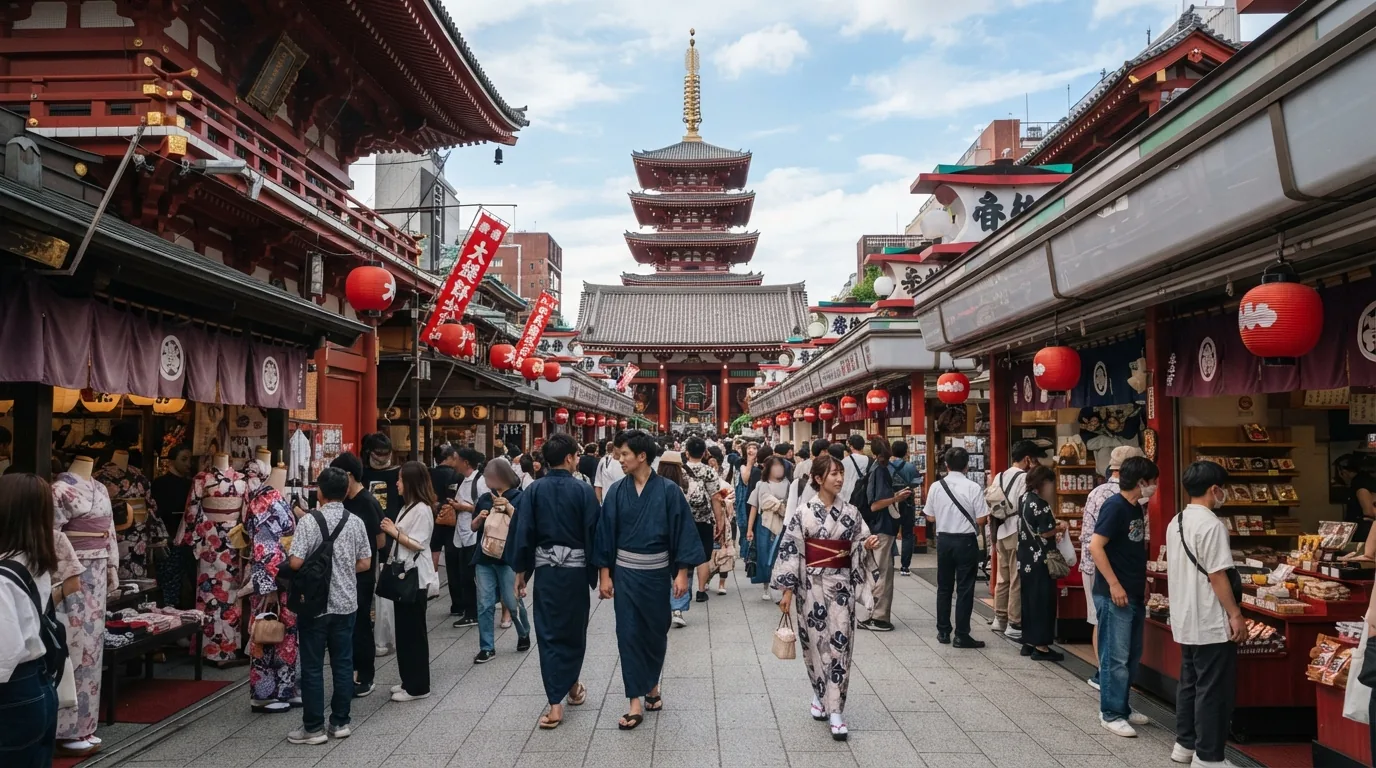
Tokyo is easiest to enjoy when travelers stop trying to see the whole city at once. Each day should connect nearby neighborhoods by rail: old Tokyo in Asakusa and Ueno, youth and fashion in Shibuya and Harajuku, polished shopping in Ginza, and neon energy around Shinjuku.
Best things to do in Tokyo
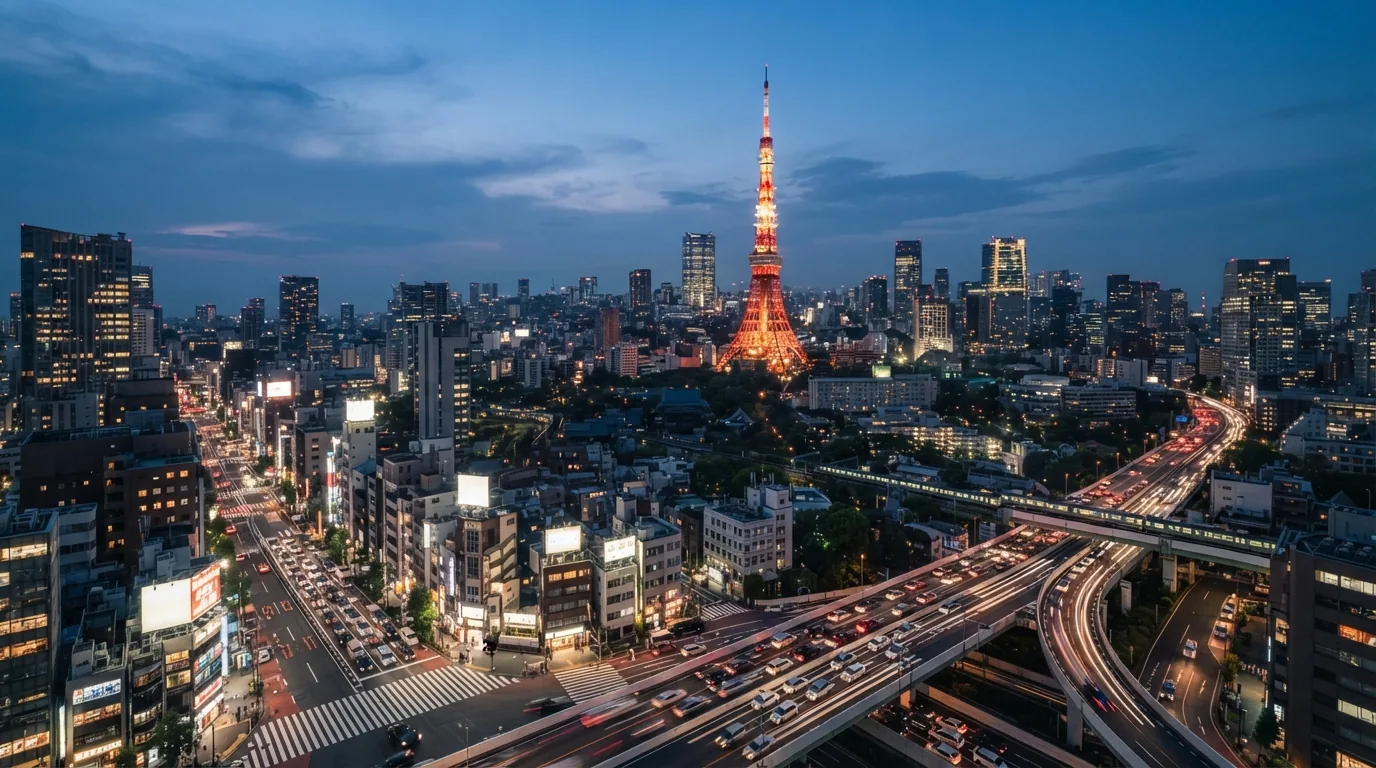
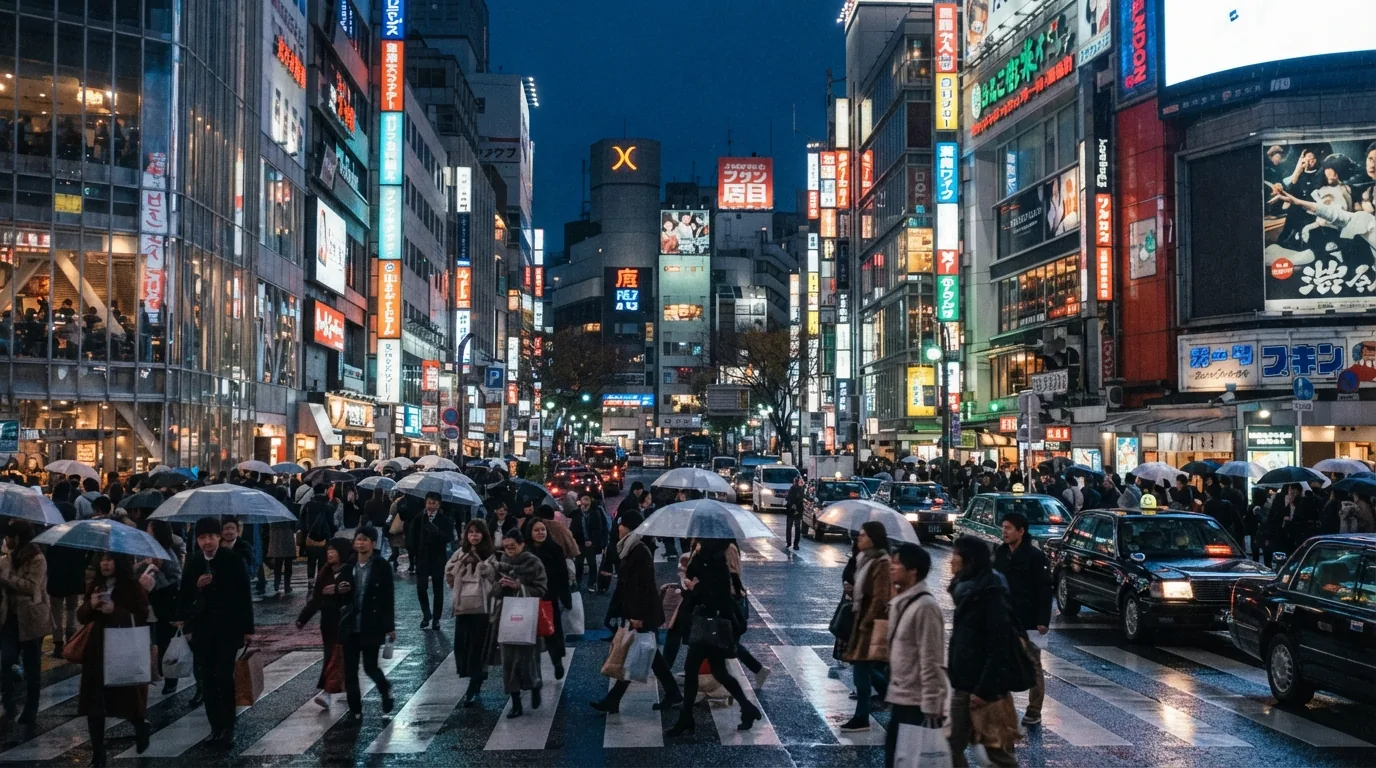
Sensō-ji in Asakusa is a strong cultural opening, while Shibuya Crossing gives the modern-city image travelers expect. Meiji Jingu adds a quiet forest break, Tokyo Tower or skyline decks help with orientation, and Ueno offers museums, parks and easier pacing.
Food and local taste
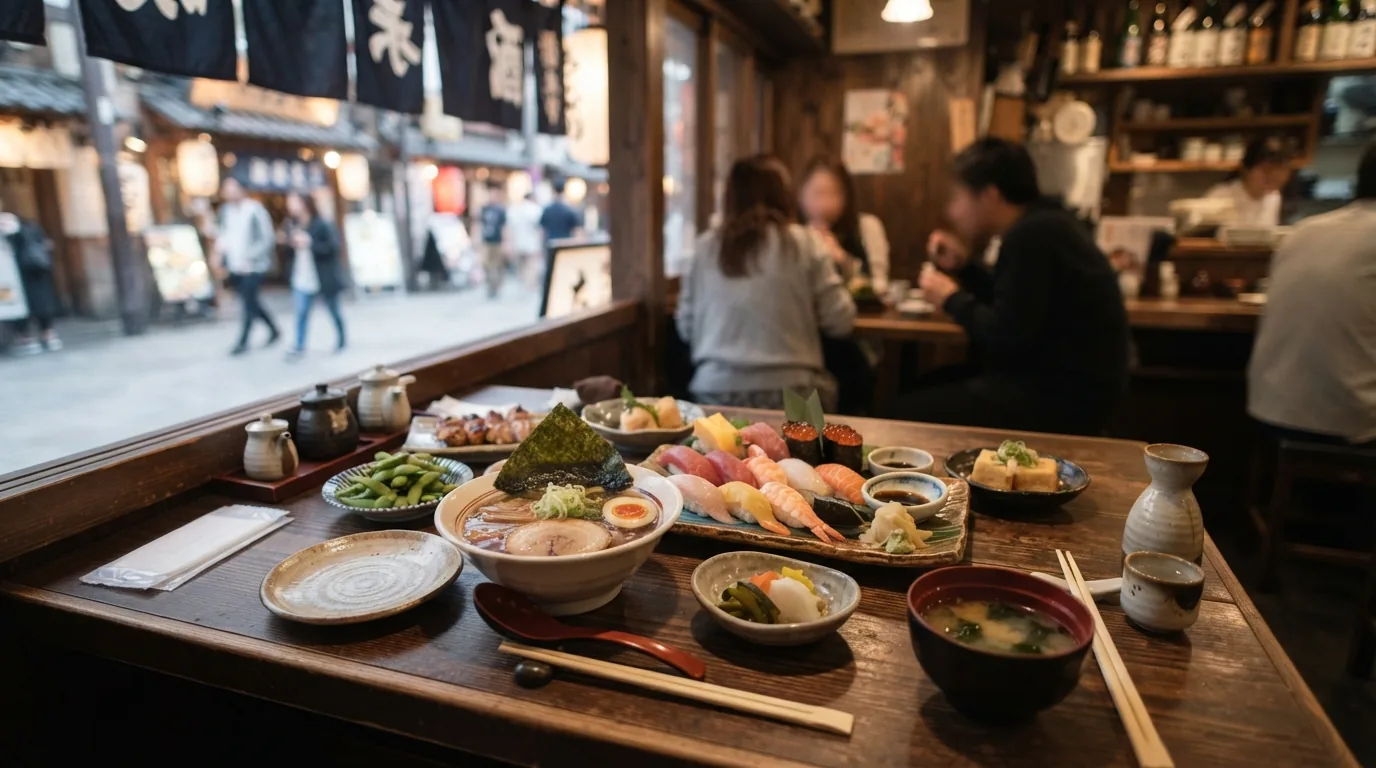
Tokyo is one of the world’s best food cities at every budget level. Ramen shops, sushi counters, depachika food halls, izakaya, convenience-store snacks and small neighborhood restaurants can all belong in one trip. The best plan leaves room for spontaneous meals rather than booking every table.
How to get around
Rail is the main travel method, but stations can be complex. Staying near a useful line matters more than choosing a famous hotel district. Families should avoid too many transfers per day and keep luggage movement simple.
Budget and trip style
Tokyo is not automatically expensive. Food can be affordable, trains are efficient and many neighborhood walks are free. Costs rise with premium hotels, taxis, theme parks, observation decks and long-distance side trips.
Practical tips
Use comfortable shoes, keep a portable battery, learn basic rail etiquette and plan cash/card flexibility. Spring and autumn are popular, so book rooms early. Summer humidity can slow down outdoor sightseeing.
Tokyo photo guide
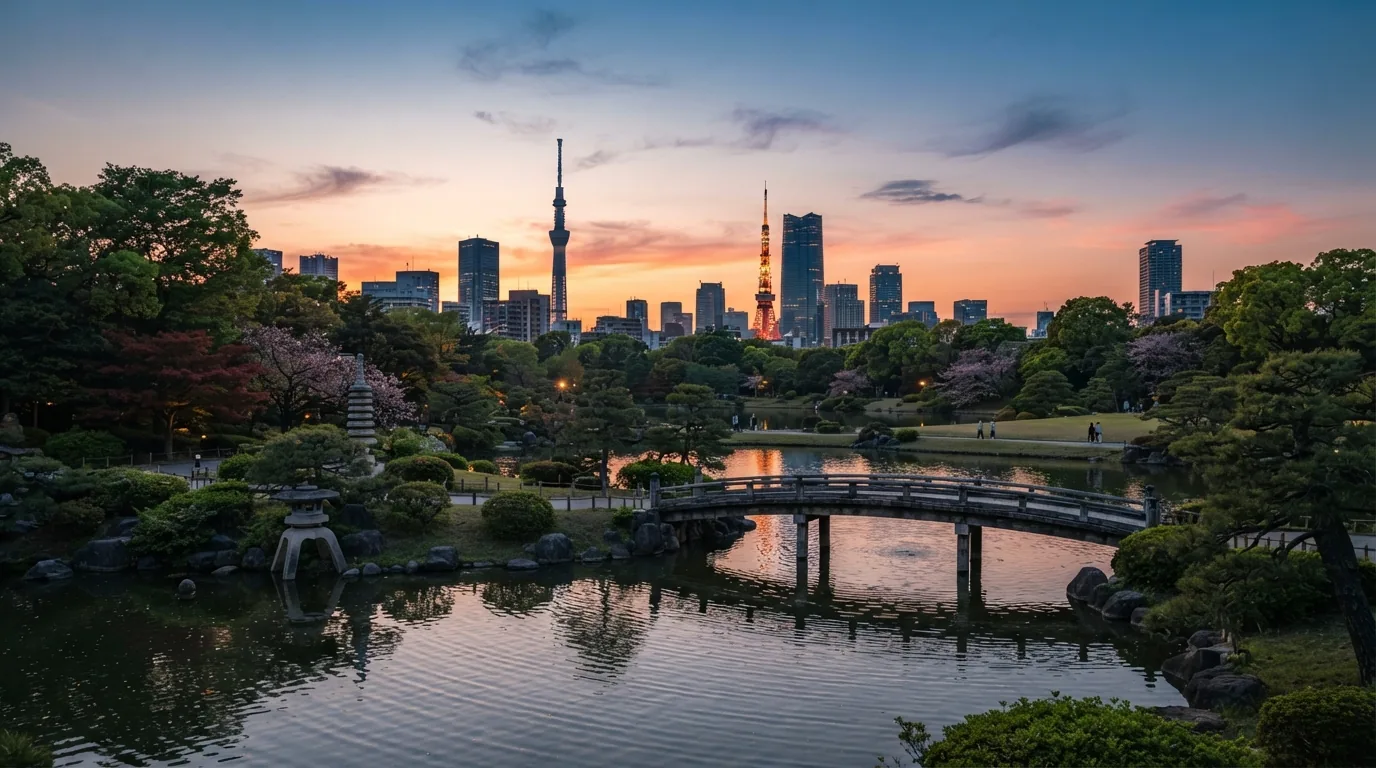
Tokyo hero travel atmosphere. Local life and city texture in Tokyo. Food, café or lifestyle mood for Tokyo. Sunset or scenic view for Tokyo. Experience-focused travel image for Tokyo.
Quick travel notes
Best for food, culture, shopping, technology, rail-based exploring and repeat visits
Choose stay areas such as Shinjuku, Ginza, Ueno, Asakusa or Tokyo Station by route needs
Use rail passes and IC cards smartly, but keep daily routes geographically realistic
Mix busy districts with gardens or temple areas so the city does not feel overwhelming
Key places, addresses, phones and map points
Sensō-ji Temple2 Chome-3-1 Asakusa, Taito City, Tokyo 111-0032, Japan Phone: +81 3-3842-0181 Coordinates: 35.7148, 139.7967 Hours: Temple grounds are generally accessible, but halls and shops have specific hours. Tokyo’s classic temple-area experience, strongest when paired with Asakusa streets.
Tokyo Tower4 Chome-2-8 Shibakoen, Minato City, Tokyo 105-0011, Japan Phone: +81 3-3433-5111 Coordinates: 35.6586, 139.7454 Hours: Observation deck hours vary; confirm on the official site. A nostalgic skyline landmark and easy orientation point for first-time visitors.
Shibuya CrossingShibuya Scramble Crossing, Shibuya City, Tokyo, Japan Phone: Outdoor public crossing; no single visitor phone. Coordinates: 35.6595, 139.7005 Hours: Public area; evenings and weekends are busiest. A high-energy Tokyo moment best combined with Shibuya shopping and food streets.
Meiji Jingu1-1 Yoyogikamizonocho, Shibuya City, Tokyo 151-8557, Japan Phone: +81 3-3379-5511 Coordinates: 35.6764, 139.6993 Hours: Gate and shrine-area hours vary by season. A peaceful forest shrine near Harajuku that balances Tokyo’s busy urban districts.
Ueno Park / Tokyo National Museum areaUenokoen, Taito City, Tokyo, Japan Phone: Museums have separate visitor contacts. Coordinates: 35.7156, 139.773 Hours: Park and museum hours vary; verify each venue. A practical culture-and-park cluster for museums, cherry blossoms and easier family pacing.
Assistant search terms connected to this page
These searches, tags and semantic phrases are connected to this destination so the VoyaPlace assistant can match natural questions, spoken searches and plan requests.
Sources and verification notes
Addresses, phone numbers and opening rules can change. VoyaPlace keeps the guidance practical and adds official links where possible, but travelers should verify live details before booking or visiting.