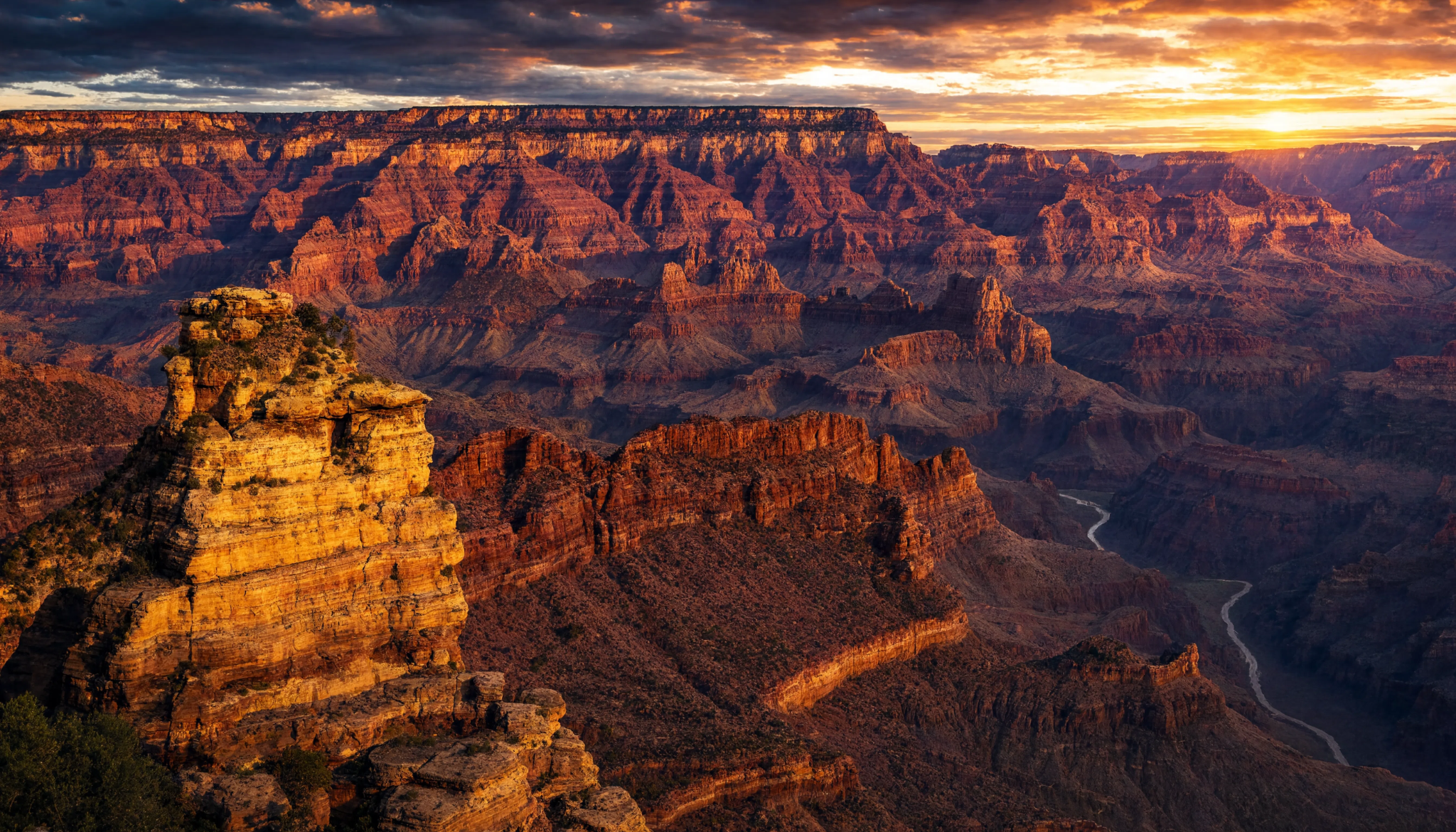
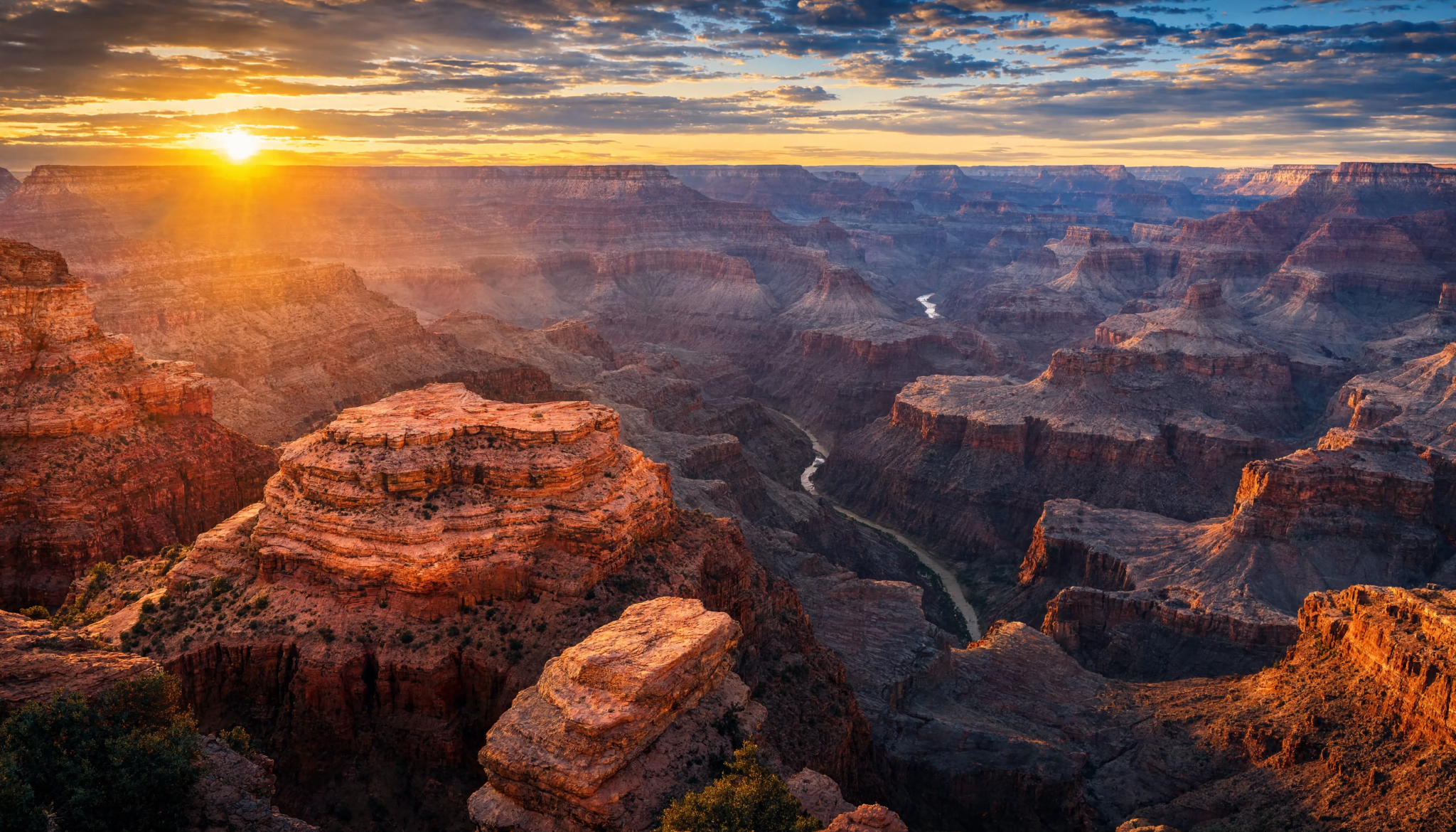
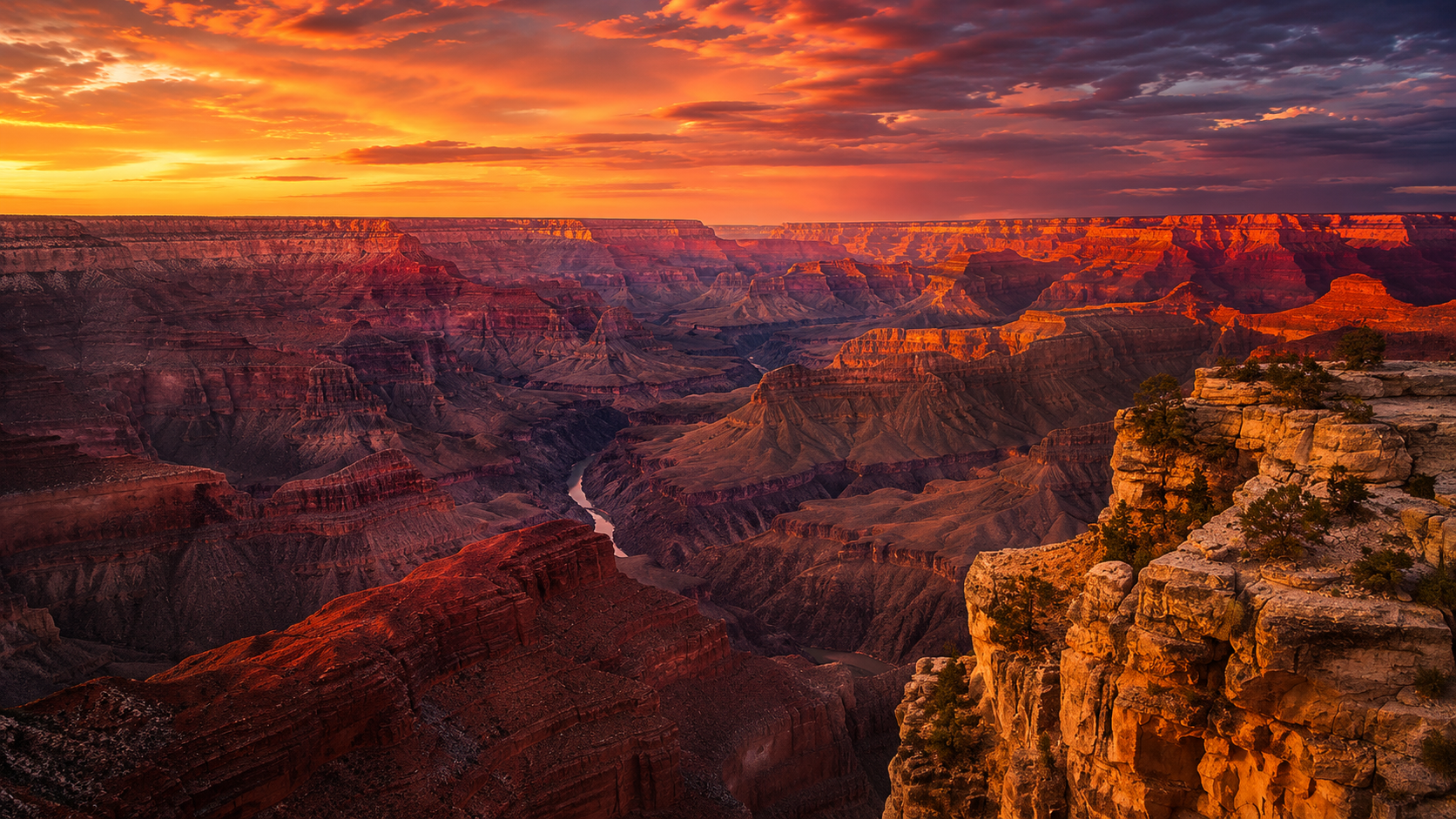
The Grand Canyon is one of the most famous natural landscapes in the world, known for massive layered cliffs, huge open viewpoints, desert light, classic rim walks and the Colorado River far below. It works best when visitors choose the right rim, pace and walking level instead of trying to do everything in one rushed stop.
Grand Canyon content matters because people rarely search for it in only one way. They ask about Grand Canyon tours, Grand Canyon travel guide information, Grand Canyon hikes, South Rim vs North Rim, Grand Canyon day trips from Las Vegas, the best time to visit, weather, ticket costs, family suitability, where to stay and whether one day is enough. The honest answer is simple: the Grand Canyon is easy to reach from famous U.S. road-trip routes, but it is too large to treat casually. Strong planning starts with choosing the right rim and setting a realistic daily pace.
Classic Grand Canyon planning starts with viewpoint timing, not only distance on the map.
Why travelers choose the Grand Canyon
The Grand Canyon is ideal for travelers who want a very strong landscape experience without needing a complicated multi-city itinerary. Even a short visit can feel powerful because the scale is immediate and memorable. It works especially well for scenic road trips, photography, family travel, light walking, ranger-led exploration and classic U.S. nature travel. It is less ideal for visitors who dislike heat, long drives or exposed viewpoints.
How to think about the Grand Canyon before you go
Planning: decide first whether the trip is South Rim, North Rim or a wider Arizona/Las Vegas road trip.
Budget: park entry, lodging location, fuel, food and tour style shape the real cost more than the park entrance alone.
Accommodation: staying near the rim helps with sunrise, sunset and early trail access.
Activities: viewpoint stops, rim walks, short hikes, photography, helicopter tours and rafting all attract different travelers.
Light changes fast here, so sunrise and sunset often shape the best photo and viewing moments.
Best time to visit the Grand Canyon
Best overall: March to May and September to November are usually the easiest periods for comfortable temperatures and classic sightseeing. Summer is popular, but it is busier and can be hot, especially below the rim. Winter can be beautiful and quieter, but weather and access conditions can change, especially for roads and the North Rim.
South Rim vs North Rim
South Rim: the easiest first-time choice, with more visitor services, famous viewpoints and broader year-round practicality. North Rim: quieter, cooler in feel and more remote, but not the simplest option for a short first visit. For most travelers asking “best way to see the Grand Canyon,” the South Rim is the safest starting answer.
Can you do the Grand Canyon in one day?
Yes, but one day works best when expectations are clear. A one-day Grand Canyon visit is strongest for rim viewpoints, short walks, visitor-center time and sunrise or sunset planning. It is not the best format for trying to “see everything.” If the goal includes more than a short trail, or if the trip starts with a long drive from Las Vegas or Phoenix, an overnight stay improves the experience a lot.
Is the Grand Canyon good for families?
Yes, especially on the South Rim. Families often do well when the day is built around viewpoints, short walking sections, rest breaks, water, shade awareness and clear safety rules near edges. The Grand Canyon is visually exciting for children, but it is not a casual playground, so realistic pacing matters.
Assistant search terms connected to this page
These searches now connect directly to Grand Canyon content:
Helpful content angles for this topic
10 Things You Need to Know Before Visiting the Grand Canyon
How to Visit the Grand Canyon on a Budget
The Ultimate Grand Canyon Travel Guide
South Rim vs North Rim: Which Should You Choose?
One Day at the Grand Canyon: The Perfect Itinerary
Grand Canyon Hiking Guide: Trails for Every Skill Level